
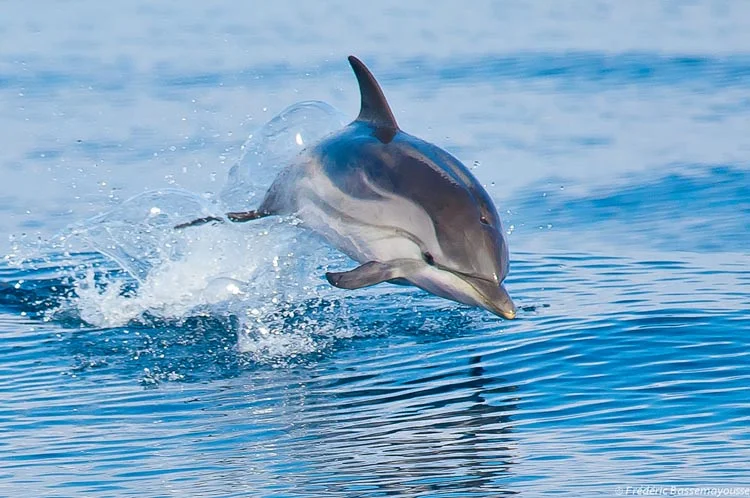
Dolphins in Greek Seas
The Greek seas are home to four species of dolphins:
- Striped dolphin (Stenella coeruleoalba)
- Bottlenose dolphin (Tursiops truncatus)
- Risso’s dolphin (Grampus griseus)
- Short-beaked common dolphin (Delphinus delphis)
All dolphins use sophisticated echolocation to navigate, hunt, and communicate. Their social behavior is remarkably complex — they form tight groups, communicate with clicks and whistles, and display playful behavior rarely seen in other mammals.
Dolphins in Crete
In Cretan waters — and especially in the Sporades Marine Park in northern Greece — you may encounter the short-beaked common dolphin (Delphinus delphis).
Despite its name, the “common dolphin” is no longer common in the Greek seas.
It is now considered endangered, with populations declining sharply over the last 30–40 years.
Characteristics of the Common Dolphin
- Length: about 1.8 m
- Colors: a striking mix of black, grey, white, and yellow
- Diet: anchovies, sardines, small fish; in some areas, squid
- Habitat depth: typically up to 200 meters, often close to shore
- Reproduction: one calf every 2–3 years, with a 10–11 month gestation
In the Corinthian Gulf, common dolphins coexist with striped and Risso’s dolphins in mixed communities — a rare behavior not observed anywhere else in the world.
Conservation
The steady decline in population is attributed to:
- Overfishing
- Habitat degradation
- Noise pollution
- Reduced food availability
- Entanglement in fishing gear
Conservation groups like WWF Greece monitor populations and promote protection measures.
