Weather forecast for Crete
Crete’s climate ranges from temperate to subtropical, characterized by hot, dry summers and mild winters. The island receives an average annual precipitation of approximately 640 mm (25 inches). In the mountainous regions, the air remains cooler and more temperate throughout the year. Snowfall is common in the high-altitude areas from mid-December to May, and during February and March, snow accumulation is often significant enough to allow for cross-country skiing—a unique and scenic experience in the Cretan mountains.
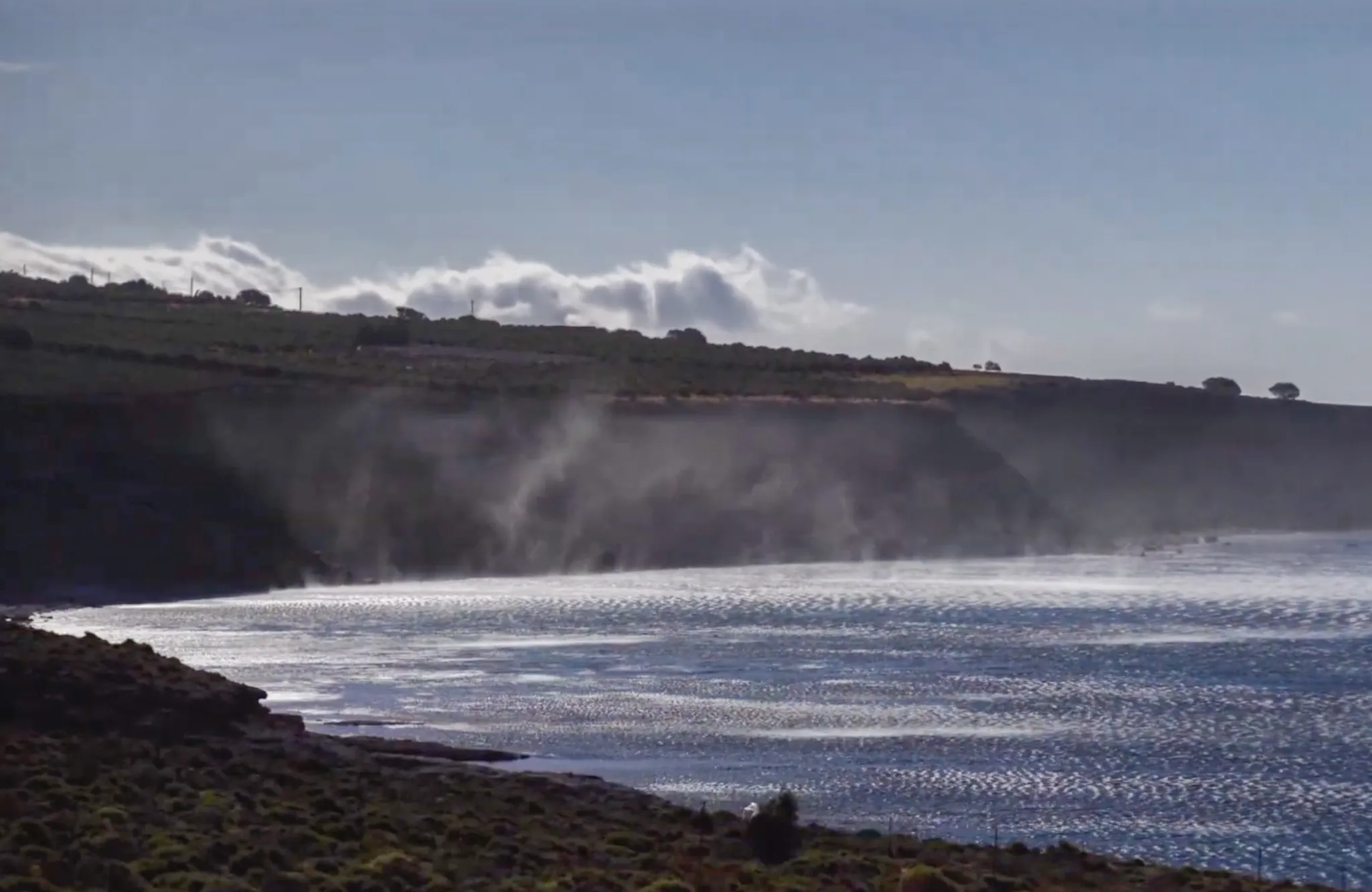
Due to its rugged terrain and deep gorges, Crete frequently experiences strong katabatic winds. Also known as downslope or gravity winds, these occur when cold, dense air descends rapidly from the high mountains toward lower elevations under the force of gravity. This phenomenon is especially noticeable during calm weather conditions, as minimal atmospheric mixing allows cold air pockets to develop and flow more forcefully down the slopes.
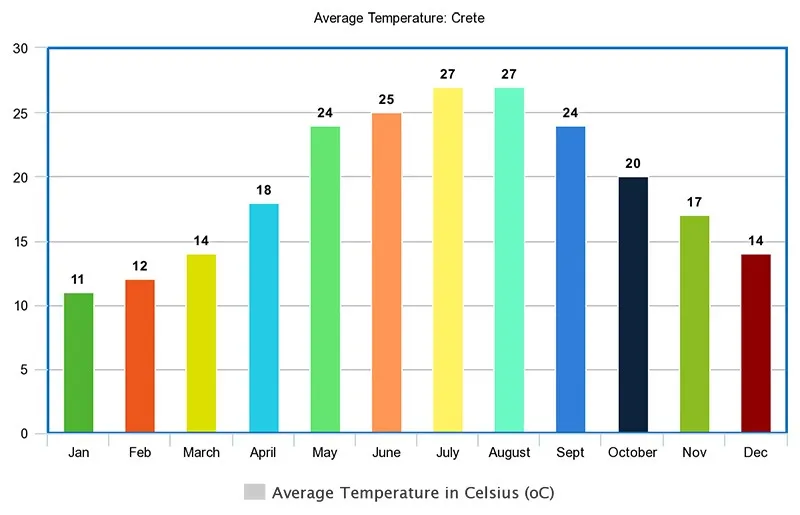
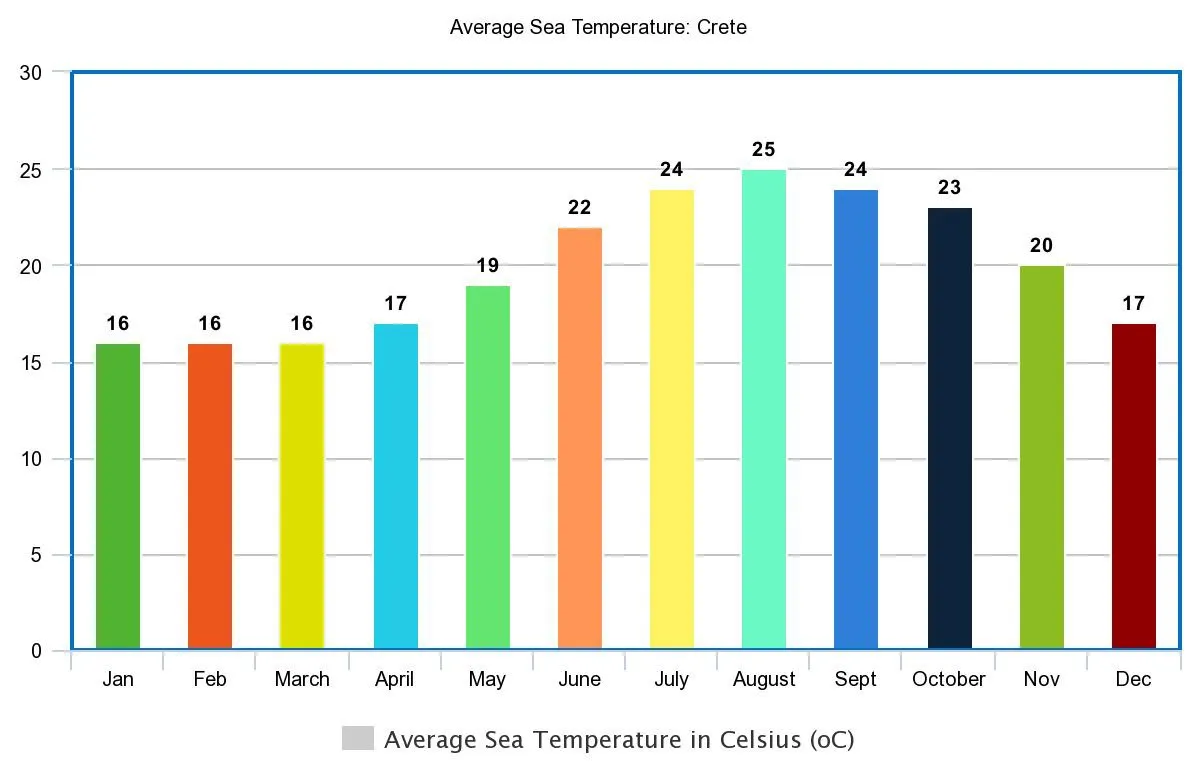
The hottest month in Crete is July, with average daytime temperatures reaching 26–27°C (79–81°F), while the coldest is January, with average temperatures around 11°C (52°F). July also boasts the longest daily sunshine duration, averaging 13 hours. The wettest month is December, which sees an average rainfall of 89 mm. Sea temperatures peak in late August and early September, making this period ideal for swimming, with average water temperatures reaching 26–27°C (78–80°F).
On particularly hot days, especially in southern Crete, temperatures can soar up to 44°C (111°F). While such extremes are rare, they can persist for two to three days and usually occur only once or twice per year.

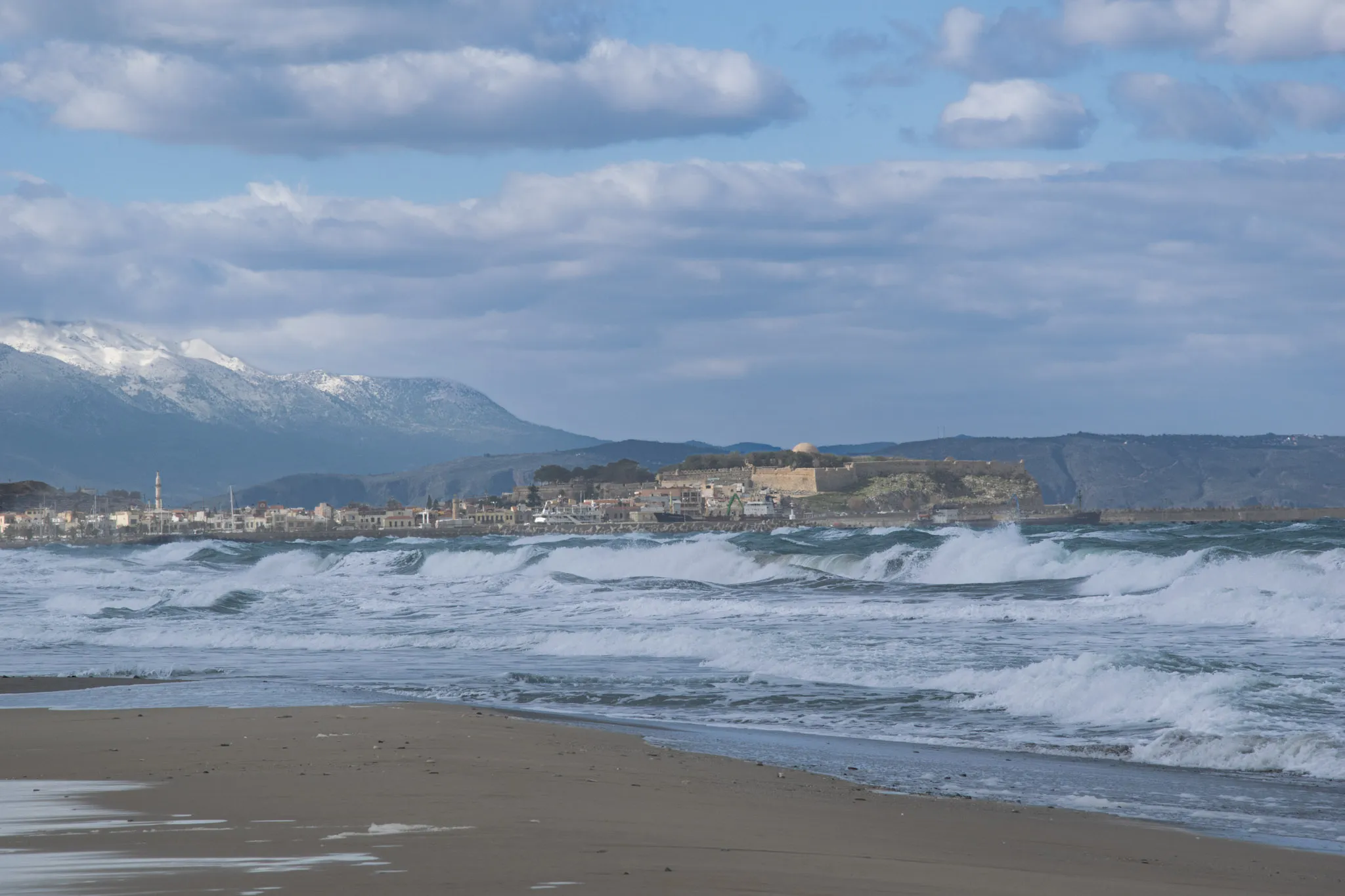
Conversely, during colder winter days, snowfall at or near sea level is not unheard of. Notably, in the winters of 2015 and 2016, Crete experienced unusually severe weather, with heavy snowfall reaching coastal areas and temperatures near the high mountain summits dropping below –15°C (5°F).